


“When Imad Mughniyeh passed away, the sound of popping champagne bottles could be heard in many places around the world.” Said Gad Shimron, a former Mossad operative. “The Americans were looking for him, the French were looking for him, the Saudis were looking for him, the Egyptians were looking for him, the Kuwaitis were looking for him and we were also looking for him.”

Imad Mughniyeh was Hezbollah’s number two leader, and was implicated in a long list of terrorist attacks over many years, primarily against American and Israeli targets. These included the 1983 bombing of the United States embassy in Beirut, Lebanon, killing 63 people, including seven CIA officers. Among the latter was Robert Ames, the head of CIA’s Near East Division.
Mughniyeh was also involved in the truck bombings against French paratroopers and the U.S. Marine barracks that same year. Those attacks killed 60 French soldiers and 240 US Marines.
Mughniyeh is alleged to have assassinated Malcolm Kerr, the president of the American University of Beirut and father of former NBA player, and current coach of the Golden Gate Warriors, Steve Kerr, in 1984.
That same year, Mughniyeh is also alleged to have attacked the US embassy annex building.
Mughniyeh participated in the 1985 hijacking of TWA Flight 847, in which he tortured and murdered the U.S. Navy Seabee diver Robert Stethem before dumping his body on the airport tarmac.
Mughniyeh was also involved in numerous kidnappings of Americans in Beirut during the 1980s, most notably the kidnapping of William Francis Buckley, the CIA station chief in Beirut. Buckley’s tragic story, having been tortured to death, was expertly told by Fred Burton and Samuel Katz in their excellent book, Beirut Rules.
Mughniyeh is also alleged to have exported his truck bombing campaign to Argentina, where he was involved in the 1992 bombings of the Israeli embassy in Buenos Aires, which killed 29, and of the AMIA cultural building in 1994 that killed 85 people. The campaign then continued to Saudi Arabia, where the Khobar Towers bombing took place in 1996, killing 19 American air force personnel.
Mughniyeh was involved in the October 2000 capture and killing of three IDF soldiers in northern Israel, and of overseeing the 2006 cross border raid that killed eight Israeli soldiers and abducted two, thereby starting the Second Lebanon War.
With such a long trail of death and destruction, it’s no wonder that Mughniyeh featured on so many wanted lists. The US tried to have him captured in France in 1986, but French officials refused to arrest him.
In 1995, a US Delta Force operation was put in place to capture him after the CIA was tipped off about his flying from Khartoum, Sudan to Beirut, Lebanon. His chartered plane was scheduled to make a lay-over in Saudi Arabia but Saudi security officials refused to allow the plane to make its stop, thwarting the operation.
In 1996, the U.S. Marines of the 13th Marine Expeditionary Unit, and Navy SEALs assigned to the U.S. Fifth Fleet were on their way to capture him from a Pakistani ship in Doha, Qatar, but the operation was called off at the last minute when it could not be fully verified that Mughniyeh was on board.
The US was, of course, not the only nation to chase after Mughniyeh. Mossad also made numerous attempts to assassinate him over the years. One of the more notable was when his brother, Fuad, was killed in a 1994 Beirut car bombing. Israel planned to assassinate Mughniyeh when he attended his brother’s funeral, but Mughniyeh is suspected to have seen through the ploy, and didn’t show up. After the Second Lebanon War in 2006, a war that Mughniyeh played a pivotal role in, Israel stepped up its efforts.
Mughniyeh’s nine lives finally ran out when Mossad and CIA teamed up in order to finally get him.
By then, Mughniyeh had moved to Damascus, not only because that’s where many of his meetings between Iran, Syria and Hezbollah were held but also because the Syrian capital was seen as a much safer place, protected as it was by Syria’s formidable secret security forces.
Nevertheless, Israel’s Signals Intelligence, Unit 8200, and Mossad put together an ingenious combination of SIGINT and HUMINT (dubbed, HUGINT), and managed to break into the Iran-Syria-Hezbollah communications network. They managed not only to discover that Mughniyeh was residing in Damascus (a well-kept secret) but also found his residence and even the name he went by on his fake passport.
One of the leaders of this innovation was Yossi Kohen, who headed Mossad’s Junction department, charged with recruiting and handling foreign agents and assets. Kohen would later become head of Mossad.
Logistics, planning and executing an on-the-ground surgical attack on such a well-protected and elusive target in the capital city of an enemy state would have been extremely difficult for Mossad. But at the time, the US still had an embassy and diplomatic relations with Syria, making it much easier for them to do most of the heavy pre-attack lifting.
Mughniyeh was surveilled by the CIA for months. He was very well protected and would constantly vary his routes and routines but CIA surveillance managed to uncover two important vulnerabilities. The first was that he drove everywhere in his silver, 2006 Mitsubishi Pajero SUV. The vehicle was regularly checked for tampering, both inside and underneath, but the spare tire housing, attached to the outside of the rear door, was never checked.
The second vulnerability was Mughniyeh’s frequent visits to three different attractive women’s houses. Most crucially, these residences were not protected and Mughniyeh was not accompanied by his protection agents to these illicit rendezvous. The attack plan combined both vulnerabilities.
On a nighttime visit to one of his lady friends, Mossad operators replaced the spare tire on the back of Mughniyeh’s SUV with a remote control bomb, smuggled into the country by the Americans. A number of covert cameras were also planted on the vehicle in order to make the identification easier before the bomb was remotely detonated. Mughniyeh then drove around with the bomb strapped to the back of his car for weeks while Mossad struggled to find the right opportunity to strike.
On February 12th, 2008, Mughniyeh was observed leaning on his car and talking to another man. That man was then identified as none other than Qasem Soleimani, commander of the IRGC’s Quds Force. Eliminating such a high-valued target together with Mughniyeh was an opportunity of a lifetime, but approval for his killing was not granted. Soleimani would have to wait till an American drone strike killed him outside Baghdad airport in January 2020.
Thankfully, Mossad didn’t have to wait long for their next opportunity. On that very same evening, Mughniyeh arrived at a Syrian intelligence safe-house in the Kafr Sousa neighborhood in Damascus to meet a number of Hezbollah operatives and his most important Syrian military contact, general Muhammad Suleiman. Suleiman was Bashar al-Assad’s special presidential advisor for arms procurement and strategic weapons. He was in charge of a secret Syrian nuclear facility that was under construction in 2007. It was discovered through another Mossad operation and then bombed and destroyed by the Israeli Air Force on September 6th, 2007.
Suleiman was also deeply involved in the Iranian, Syrian, Hezbollah weapons transfers, where he developed close relationships with both Soleimani and Mughniye.
At 10:45 pm, Mughniyeh left the meeting and was observed walking to his car. As soon as he reached it, the bomb inside the spare tire cover was detonated, killing him on the spot.
Shocked and outraged over the killing, Hezbollah vowed to take revenge, but the same intelligence penetration that revealed Mughniyeh’s location and movements, also exposed the various plots Hezbollah and the IRGC tried to execute afterwards. Retaliatory attacks against Israelis were then thwarted in India, Georgia, Thailand and Cyprus. The only attack to succeed was in 2012 when a bus carrying Israeli tourists was blown up by a suicide bomber in the parking lot of the Burgas airport in Bulgaria, killing the Bulgarian driver and five Israelis.
Enraged by Mughniyeh’s killing, general Suleiman proposed an all-out chemical missile attack on Israel. And though the proposition was promptly shot down by Assad, it quickly earned Suleiman a visit from Mossad and Flotilla 13 (Israeli Navy SEALs).
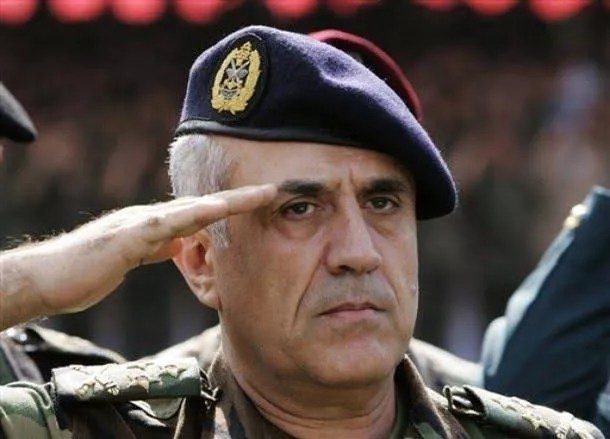
On the evening of August 1st, 2008, Suleiman hosted a dinner for a number of guests at his seaside villa near Tartus in northern Syria. While sitting at the head of the table, six bullets, simultaneously fired from two different silenced sniper rifles, entered his chest, throat and head, killing him instantly. The two Flotilla 13 snipers then retreated from their vantage points on the beach, escaped into the sea on a Zodiac boat and made their way to an Israeli navy ship a mile off the coast.
Though the state of Israel rarely acknowledges, let alone officially claims responsibility for actions of this sort, the commonly accepted belief is that Israel carried out these assassinations.
All the information presented in this article was cleared to put out on open sources.

Get my Mossad espionage thriller, Ghost Echo.


Get my book, Surveillance Zone now!
Go behind the scenes of corporate surveillance detection & covert special operations. Get a first-person account of actual covert operations I’ve participated in. Learn the secrets of the trade and discover a hidden world that’s all around you.

