Let’s take another fun look at Hollywood depictions of surveillance, surveillance detection, and covert operations.
For those who want to read my first Hollywood breakdown on the subject, click HERE.
I’ll once again remind you, dear reader, that I’m a huge movie buff, so I’m not going to pour scorn on the entertainment industry for getting things wrong. Movies and TV shows are meant to be fun, and so is this article, so there’s no need to take any of this too seriously.
Also, not all of the movies here are serious espionage films—far from it. But just as you can learn certain fieldcraft lessons from unlikely sources in real life, you can also learn a thing or two from comedic scenes.
If you do want a more serious take on the subject, check out my previous article, Tips & Suggestions for Covert Operators.
Let’s keep things simple and split this article into do’s and don’ts—good portrayals and bad ones. And since everyone loves to hate on Hollywood, let’s start with the bad.
Captain America: Civil War
Yes, yes, I know. It’s just a Marvel superhero movie. But the blunder here happens to be one that’s surprisingly common even in more serious movies.
Wanda Maximoff and Natasha Romanoff (Elizabeth Olson and Scarlett Johansson) are two extremely attractive Caucasian superheroes, each sitting alone, a few tables apart, in a Lagos café directly in front of a highly secured government facility.
How in the world are they going to blend into the West African environment as they communicate verbally with Captain America (Chris Evans)?
Easy: a trench coat and baseball cap for Wanda, and a cream-colored leather jacket and aviator sunglasses for Natasha.
Because that’s what’s how beautiful ladies blend in in West Africa, of course…
You may as well just open up a newspaper with two peepholes cut out for your eyes and be done with it.
The Matador
Julian Noble (Pierce Brosnan), an experienced professional assassin, is enacting the classic spy-movie trope of sitting on a park bench pretending to read a newspaper.
He’s doing this directly in front of an office building where his target—an unnamed man—is about to exit the building and get into his black Porsche, parked directly in front.
With his dashing good looks, stylish haircut, and flashy coat, Noble does such a terrible job of blending in and pretending that he’s not waiting for the Porsche to blow up that he gets spotted by a woman sitting on the neighboring bench.
Attracted to his flamboyant good looks, she sends her son over to ask him if the Porsche belongs to him, since he keeps staring at it—thereby exposing his correlation to the target so thoroughly that even an untrained civilian can figure it out.
As if this wasn’t bad enough, after the target enters the Porsche, Noble enacts another Hollywood trope: being the only person who coolly walks away without looking back at the explosion. even the kid gives him an accusatory glance at that point.
This raises another question: why did he even need to observe the Porsche in the first place, let alone from such close proximity?
The only reason an actual car bomber would need to remain close to a target vehicle is to detonate it at a precise moment, possibly with a wireless detonator that needs to be in relatively close proximity. And thought the Porsche does explode when the target gets inside, Noble isn’t seen activating a remote detonator.
So, if the car was going to explode anyway, perhaps triggered by the ignition key or a pressure switch under the driver’s seat, there was no reason for Noble to sit there staring at it and exposing himself to observant bystanders who could describe him to police.
Ronin
Yes, I know. It’s shocking to see Ronin, one of my all-time favorite movies, in this category.
But despite its awesomeness, Ronin contains a gaping fieldcraft blunder that earns it a place on the naughty list.
The Ronin chase and heist scene is arguably one of Hollywood’s all-time great action sequences. The problem, however, comes from the terrible operational planning that leads up to it.
Early in the movie, Sam (Robert De Niro) famously confronts Spence (Sean Bean) about his amateurish ambush plan—“With a cup of coffee.”
Sam then takes the team through what appears to be a thorough hostile-planning process that includes Open Source Intelligence (OSINT), Signals Intelligence (SIGINT), route planning, dry runs, weapons and specialized equipment procurement, and a nicely shot field-intelligence sequence in which he and Deirdre (Natascha McElhone) surveil and assess the target team around their hotel in Monaco.
Everything points toward a professional plan that should result in a clean, effective attack.
What follows, however, may be one of Hollywood’s all-time best action sequences, but from an operational perspective, it’s a horribly messy affair.
The ambush begins with an intense shootout in a public location involving a grenade launcher and multiple automatic rifles, resulting in plenty of collateral damage and civilian casualties. It then continues into a prolonged car chase involving a LAW missile launcher, more collateral damage and more casualties, before reaching Nice, where car rammings and additional shootings cause even more destruction.
The worst part is that this prolonged, highly messy and destructive rolling attack didn’t result from the plan going horribly wrong, as happens in, say, the heist scene in Heat.
In Ronin, all of it was the plan.
No sane practitioner, let alone an experienced one like Sam, would have even considered such a messy, risky, and highly conspicuous operation.
Better to have gone with Spence’s original crossfire plan than the insanely chaotic operation they ultimately executed.
Then again, if they had, we would have missed out on one of the greatest action sequences ever filmed.
OK, let’s switch gears and look at some good portrayals.
A Most Wanted Man
This was one of John le Carré’s inferior books, which I can’t quite understand why anyone would want to turn into a movie. And although it has some really good acting, staying relatively faithful to the book resulted in an equally boring movie.
Nevertheless, the way Issa Karpov (Grigoriy Dobrygin) detects a classic surveillance blunder and executes a clever evasion tactic is portrayed very well.
You can very subtly see an out-of-focus surveillance operative run up the train-station stairs behind them before entering the adjacent train car with the couple who had been standing on the platform.
Karpov then notices the operative’s earpiece and his nervous glance.
And oftentimes, that’s all it takes.
It’s a perfect portrayal of a classic surveillance mistake.
Had the operator been more professional, he would have known there was no reason to risk exposure by glancing so quickly at Karpov, who was safely contained in the next car.
Had the operator simply entered the car and looked away—even for a few seconds—the doors would have closed and the surveillance could have continued.
Resisting the urge to overcheck and overobserve is something most surveillance operatives have to learn to avoid, ideally during training.
The Informant!
Another funny example of that same amateurish urge to overcheck appears in this scene from The Informant!, where Mark Whitacre (Matt Damon) can’t resist his comedic compulsion to keep checking the covert recording devices he knows are there.
Yes, of course the scene is funny, and Whitacre is an untrained businessman rather than a covert operator (the movie is based on a true story). But here again we see a very real fieldcraft error being hilariously but accurately portrayed on screen.
It’s a classic mistake that I’ve seen real operators make in the real world.
The Killer
The Killer (Michael Fassbender) offers a couple of interesting pointers here.
The idea of the gray German tourist cover is quite good. The point is to look uninteresting, unremarkable, and completely forgettable.
And the idea of going to McDonald’s rather than dining in some stylish, James Bondian restaurant is also quite good—and considerably more realistic.
The Foreigner
Throughout the entire movie, Quan Ngoc Minh (Jackie Chan) is the epitome of gray, drab, and almost invisible.
He uses this outward appearance to his advantage and even disguises an incendiary bomb as ordinary groceries.
Though middle-aged Asian men may have a natural advantage when working covertly in many major American cities (more on that here), Liam Hennessy (Pierce Brosnan) correctly points out that this isn’t the case in Belfast, where the Asian population is relatively scarce.
Tinker, Tailor, Soldier, Spy
This masterful movie, based on one of John le Carré’s better books, also featured in my last article for its use of drab and boring—and therefore effective—covers.
In this case, however, Jim Prideaux (Mark Strong) demonstrates that appearance alone can’t always provide good cover if your presence and actions are out of place.
Granted, George Smiley (Gary Oldman) isn’t trying to hide from Prideaux. Quite the opposite—he’s there specifically to see him.
But Prideaux still uses the opportunity to teach the young boy he’s mentoring a thing or two about detection.
Being curious and questioning what you’re seeing is at the heart of what I like to call Inductive Observation, which can be extremely useful in security, law enforcement, and intelligence work.
The Americans
Unsurprisingly, I also covered this amazing show in my last article.
Here we have yet another example of a good cover and cover story granting Claudia (Margo Martindale) access to the apartment of a cautious man who, by all rights, should have been even more cautious.
Note once again that external appearance isn’t just about what a person is wearing. It’s also about the demographics they fall into.
People simply don’t tend to suspect middle-aged women and little old ladies.
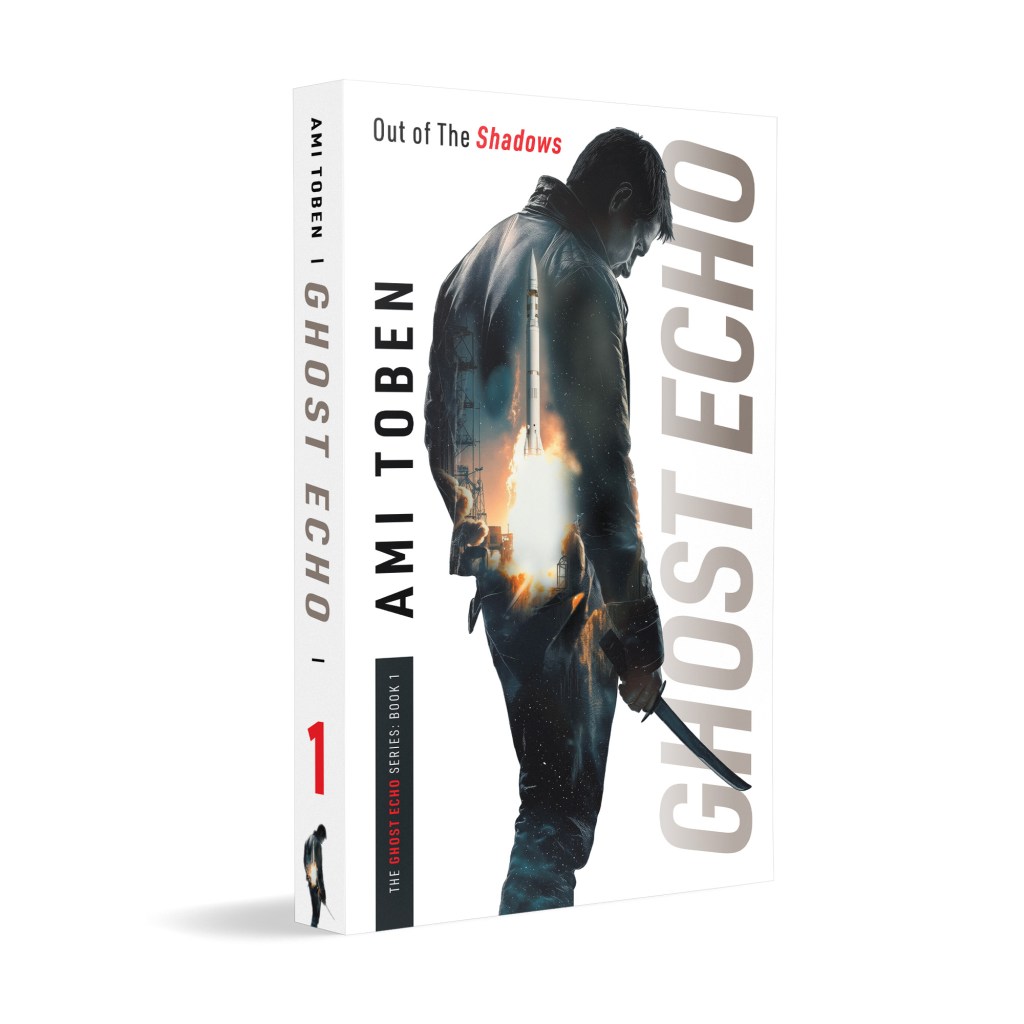
I covered this in the demographics section of my previous article, and I made very good use of it in my espionage thriller Ghost Echo, where one of the deadliest and most effective assassins on the planet is, to all outward appearances, a drab middle-aged woman who looks like someone’s aunt.
Spy Game
There’s not much to say about Tom Bishop’s (Brad Pitt) training montage. There’s definitely some stuff in there that comes from actual intelligence training.
I personally like the one-on-one field-training sequences, which was also much of the way I myself was trained.
I liked it so much that I incorporated the same approach into the training of my protagonist in Ghost Echo, to
Better Call Saul
After Mike Ehrmantraut (Jonathan Banks) realizes that his movements have been tracked through a device installed in his car’s fuel-tank cap, he decided to turn the tables on them.
True to reality, tracking devices like this need to be replaced when their batteries run low.
Mike replaces the tracking device with his own, allowing him to track the trackers. When they eventually arrive to replace their device with a new one, they actually drive off with Mike’s.
It’s a good portrayal of countersurveillance—surveilling the surveillants.
It’s also a very realistic portrayal of the tedium of nighttime surveillance.
Those who’ve experienced solo overnight surveillance operations may be able to attest to just how depressingly mind-numbing it can be. The kind of thing that makes you question your life choices and wonder how exactly you ended up sitting in the dark at 3:17 in the morning watching the same building for the sixth consecutive hour.
Beautifully directed and co-written by Vince Gilligan, this is a real gem.
Jurassic Park
OK, let’s end on a fun note.
The “See, nobody cares” line, subsequently turned into a popular meme, is probably the funniest scene in Jurassic Park, not least because of Wayne Knight’s (Seinfeld’s Newman) hilarious portrayal of Dennis Nedry.
But beyond the laughs, there’s actually a simple—and surprisingly good—fieldcraft lesson here.
A clandestine meeting is taking place at an outdoor restaurant in beautiful Costa Rica.
Nedry, who is portrayed as something of an oaf, is actually spot-on in his cover as a Hawaiian-shirt-wearing American tourist, happily enjoying a meal.
Enter stage left Lewis Dodgson (Cameron Thor), who’s not only dressed more seriously and carrying two large bags but also acts nervously as he slinks toward Nedry, wearing sunglasses and a fedora. He’s, in fact, so nervous that he forgets to close the cab door after departing it, earning a scornful stare from the annoyed driver who will surely remember him.
What follows is a classic, comedic Odd Couple pairing, but ironically, it’s the oafish Nedry who’s the one with the better fieldcraft.
Dodgson tries so hard to remain incognito that he ends up sticking out like a sore thumb, something that Nedry even makes fun of him for.
And no, yelling out someone’s real name across the restaurant just before a clandestine meeting is obviously not the best idea, but the “See, nobody cares” line is actually quite accurate.
Your true mission may be risky and consequential but if you simply look and act casual, most people around you really don’t care, which is the lesson Nedry teaches Dodson here.

I hope you’ve enjoyed reading this article as much as I did writing it.
Be sure to check out GHOST ECHO, my espionage thriller.

Also, check out my previous book, SURVEILLANCE ZONE.